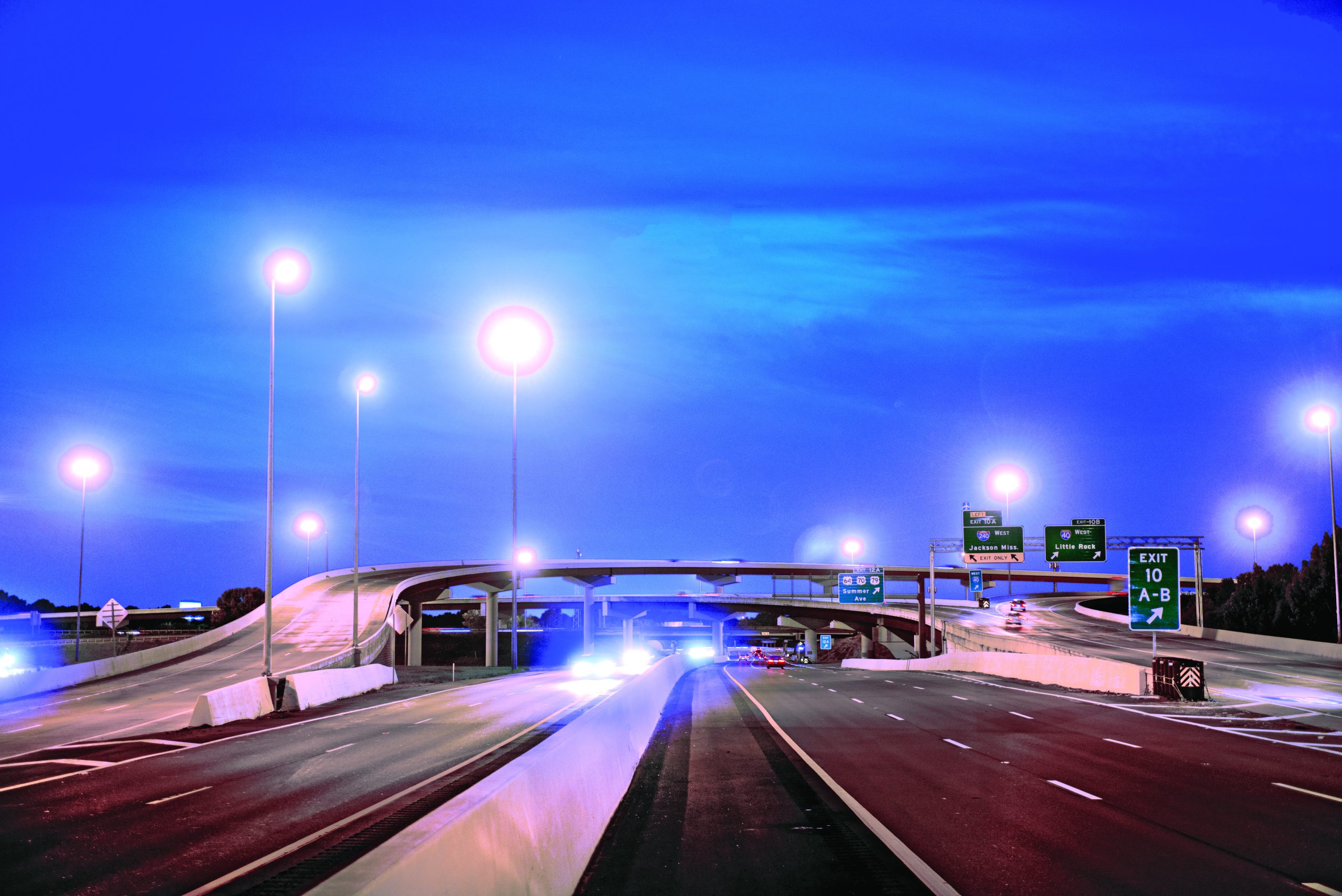
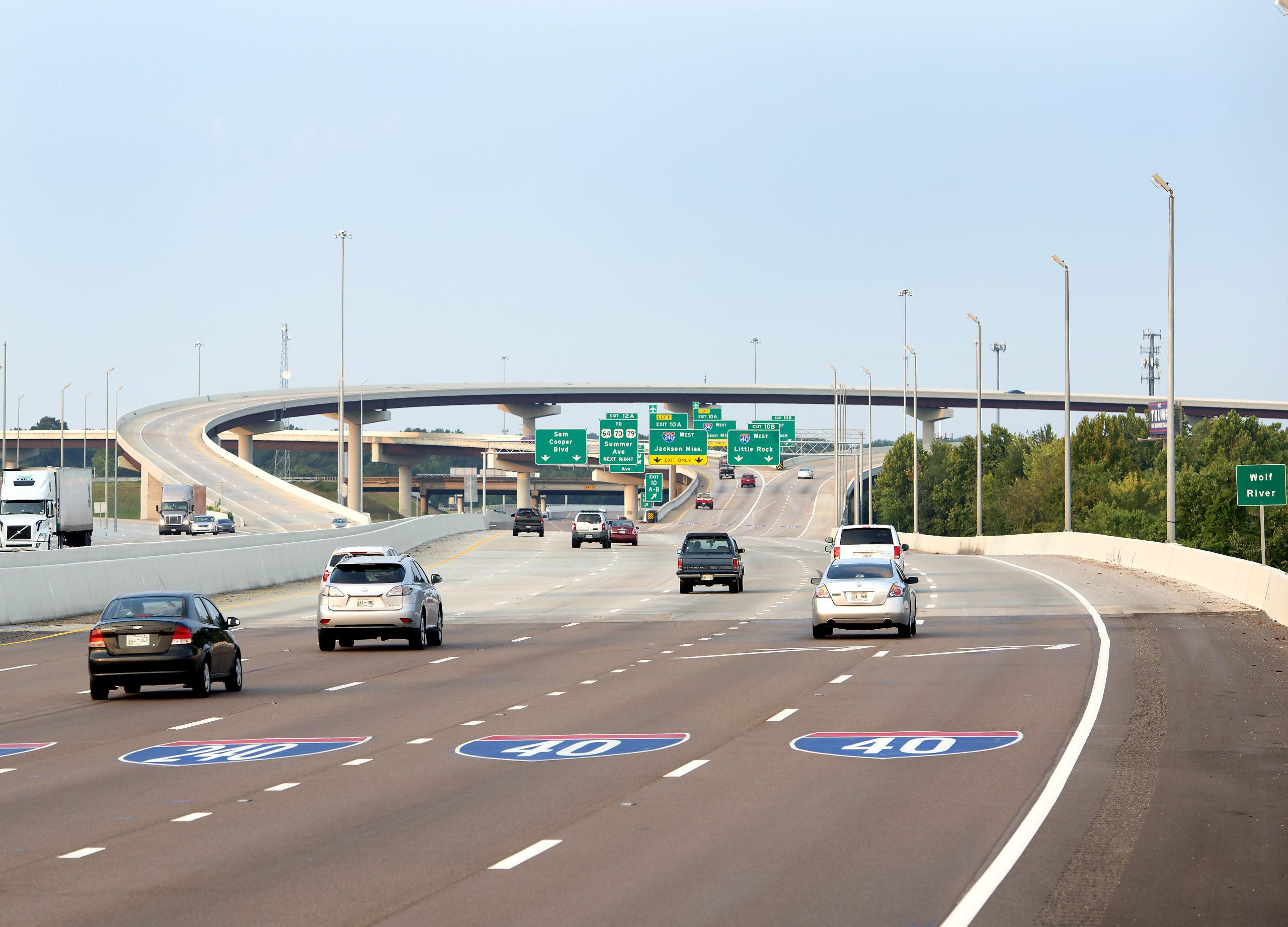
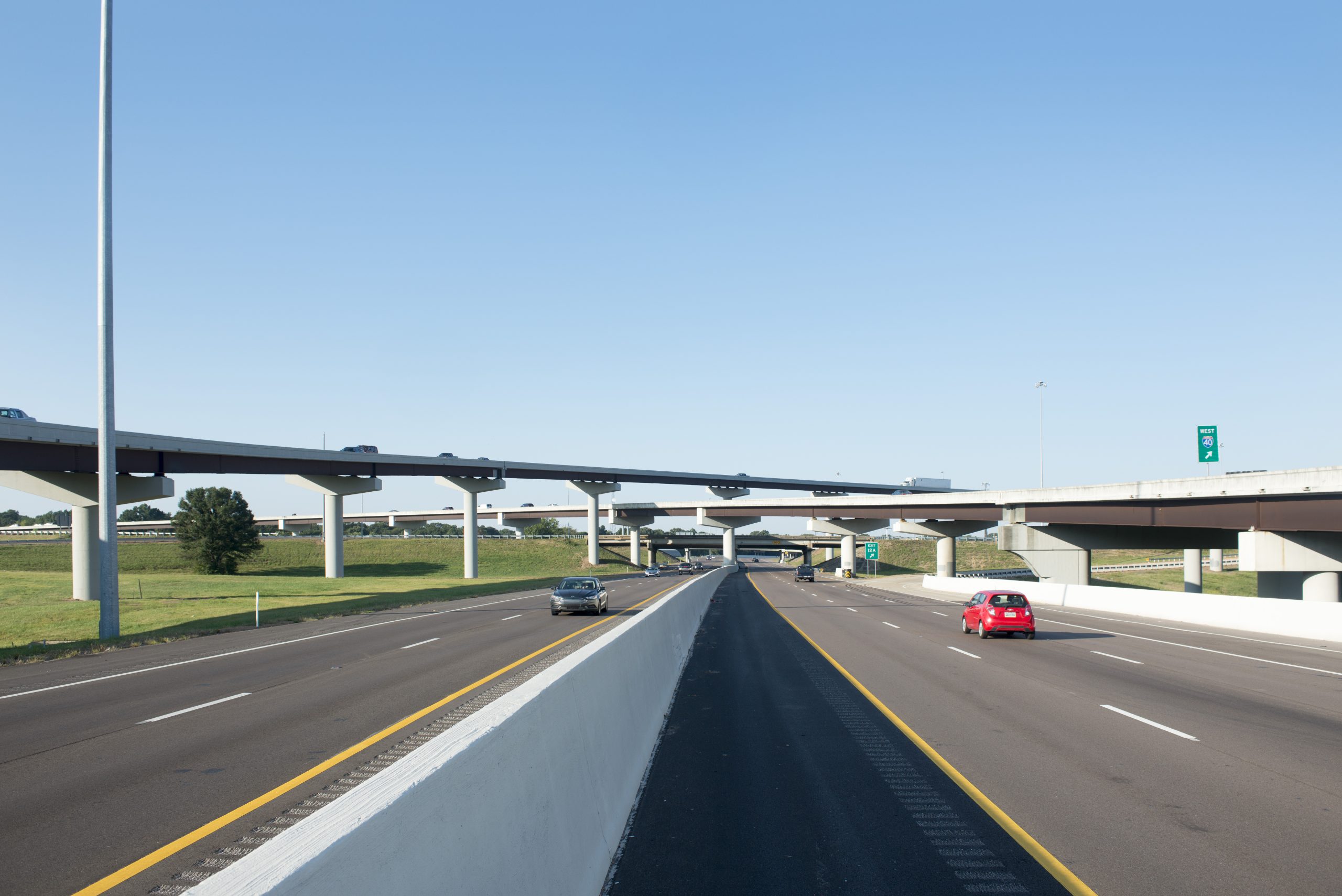
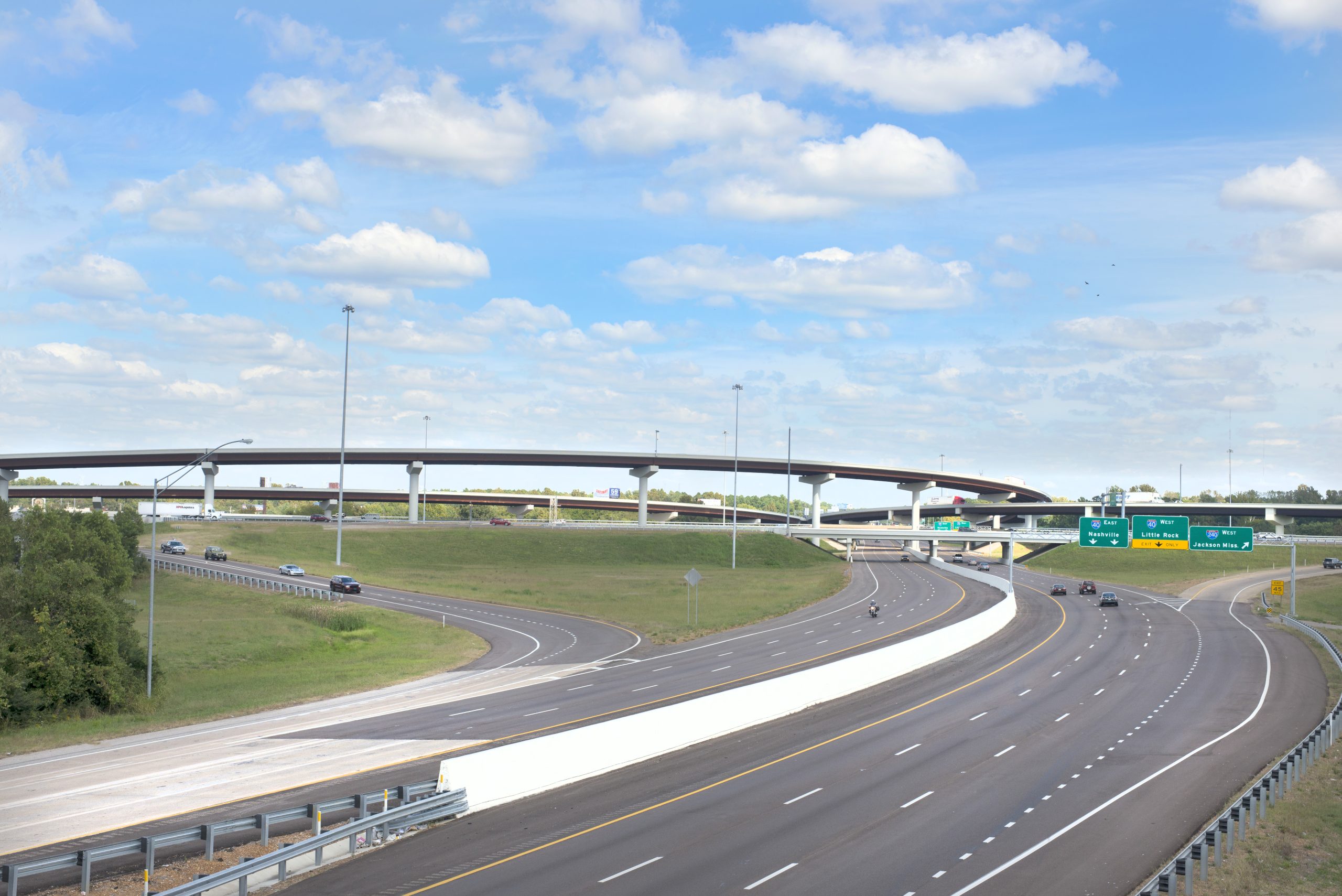
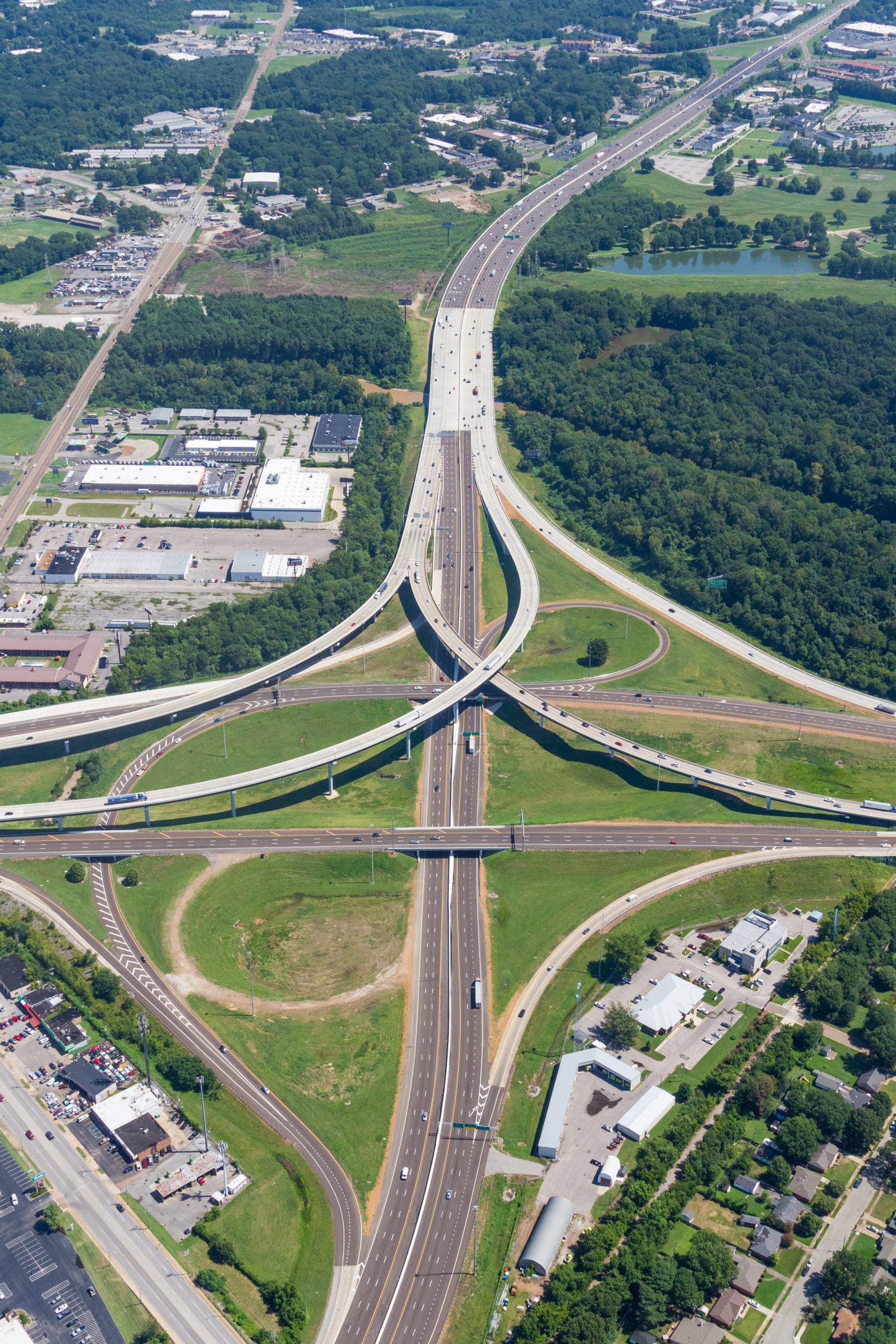
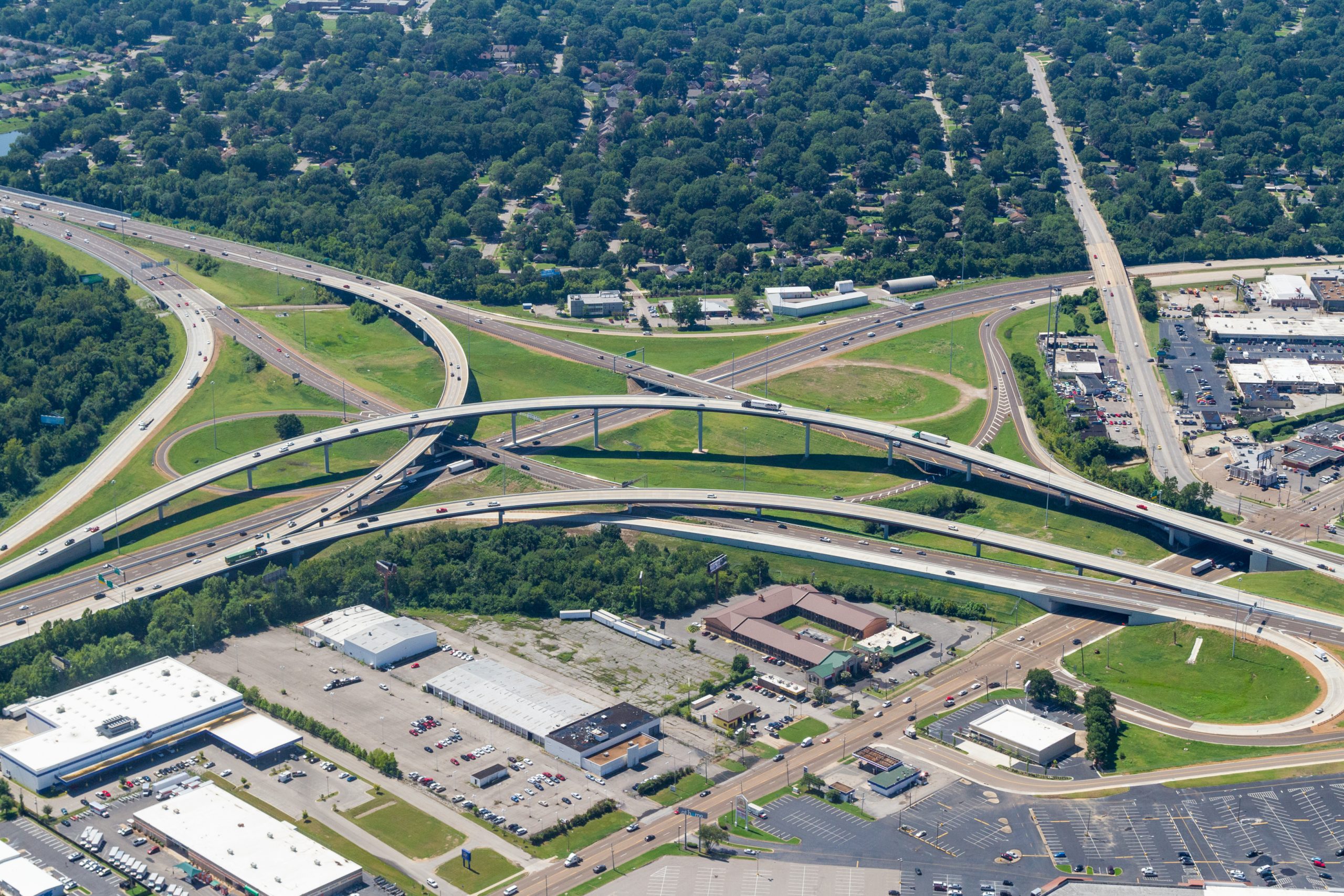
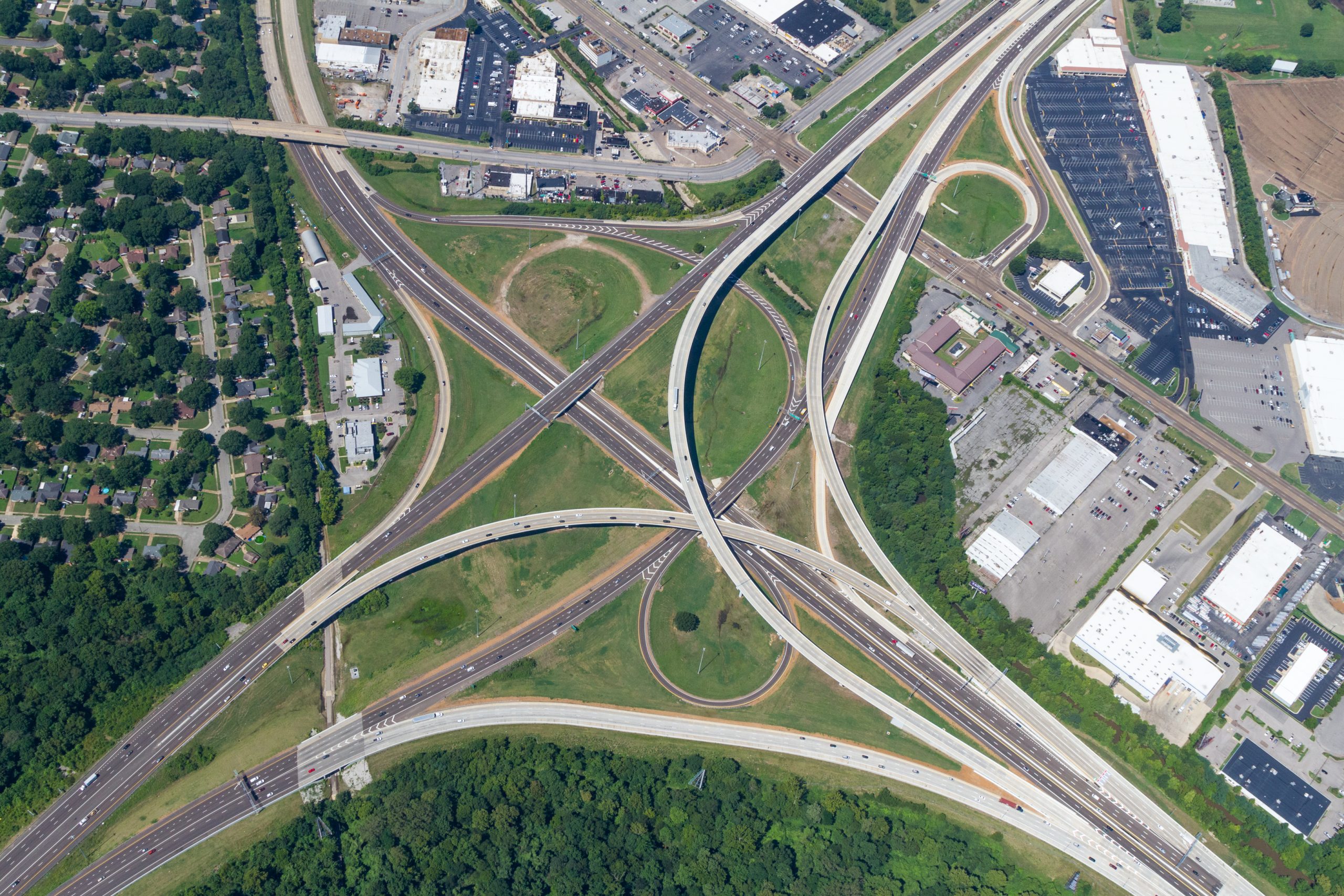
Rapid growth on the east side of Memphis has caused significant traffic congestion and safety issues at the I-40/I-240 Interchange in Shelby County, TN. With continued growth, the interchange is projected to be overwhelmed with more than 350,000 vehicles daily by 2035. BH had designed the initial (Phase I) interchange improvements, which were completed in 2003, and TDOT contracted with BH to design the Phase II improvements.
Phase I replaced portions of the original interchange and provided the new interchange with an increased capacity for the traffic going around the south side of Memphis via I-240. It also shifted roadways and ramps to provide room for Phase II improvements.
Later Phase II infrastructure improvements improved the flow of traffic through this highly traveled area. The project included the roadway and structures from Sam Cooper Boulevard to the White Station overpass, I-40 from Sycamore View to Covington Pike, and I-240 to the north side of the Walnut Grove interchange. The existing low-speed ramps carrying the eastbound and westbound I-40 movements were replaced by higher-speed, fly-over structures with two lanes each. Within the limits of the project, I-40, I-240, and Sam Cooper Boulevard were widened with an additional lane in each direction. Also, the ramps and intersection at the Covington Pike Interchange were redesigned. This added additional lanes and reduced queues which had been backing up into the I-40 through lanes. The Phase II design and subsequent construction improved traffic capacity and efficiency. The final configuration includes four levels rising to approximately 75 feet, the first of its kind in West Tennessee.
Buchart Horn designed the project under an accelerated schedule to help the Tennessee Department of Transportation procure federal funding that became available very late in the design phase. Three months were shaved from the design schedule and TDOT successfully secured the federal funding commitment.

 Transportation