
Across the country, colleges and universities are confronting a difficult reality. Enrollment growth that once seemed assured has slowed, flattened, or reversed, while the cost of operating, maintaining, and renewing campus facilities continues to rise. Many institutions are managing building portfolios that were planned for a different era, one defined by sustained enrollment growth, expanding program offerings, and centralized infrastructure systems sized for long-term expansion.
For facilities and capital planning teams, this shift has created growing pressure. Buildings that remain technically functional may no longer align with current academic delivery models or utilization patterns, yet they continue to carry full operating, maintenance, and renewal costs. Deferred maintenance accumulates, system replacements loom, and limited capital must be stretched across more square footage than current enrollment and programs can realistically support.
In response, many institutions are stepping back to ask fundamental questions about their physical campuses. Rather than focusing on what to build next, leadership teams are increasingly examining how well their existing facilities align with current academic programs, student experience, and long-term institutional goals.
This moment is not simply about contraction. It is about recalibrating campus space so that it remains purposeful, efficient, and sustainable over time. When approached thoughtfully, this work allows institutions to reduce long-term operating burdens, better align capital investments with institutional priorities, and create facility portfolios that remain adaptable as enrollment patterns and academic needs continue to evolve.
The Cost of Underutilized Space
Campus buildings represent long-term assets that carry ongoing costs regardless of how fully they are used. Utilities, custodial services, deferred maintenance, and system replacements do not scale down automatically, or easily, when enrollment declines.
In many cases, the challenge is not a lack of space, but a misalignment between the space available and the academic programs offered at the institution. Buildings designed for past enrollment levels or outdated instructional models can quietly drain resources, even when they appear functional on the surface.
Over time, this imbalance limits an institution’s ability to reinvest in facilities that directly support recruitment, retention, and student success.
Shifting from Growth to Optimization
As enrollment patterns evolve, campuses are increasingly shifting from growth-based planning to optimization-based planning. This change in mindset opens the door to a broader set of strategic responses, including:
- Consolidating academic departments into fewer, more efficient buildings
- Repurposing underutilized residence halls or administrative facilities
- Reconfiguring interiors to support flexible teaching, hybrid learning, and shared spaces
When guided by proper data and long-term planning, these strategies allow institutions to reduce operating costs while preserving academic quality and campus character. Just as importantly, they create opportunities to reallocate funding and resources toward the facilities that most directly support institutional priorities.
Planning Before Making Permanent Decisions
Decisions about consolidation, reuse, or demolition carry long-term consequences and are difficult to reverse once implemented. For facility leaders, these choices must balance academic priorities, financial constraints, historic preservation concerns, and community expectations. For that reason, effective campus right-sizing requires more than intuition or anecdotal observations.
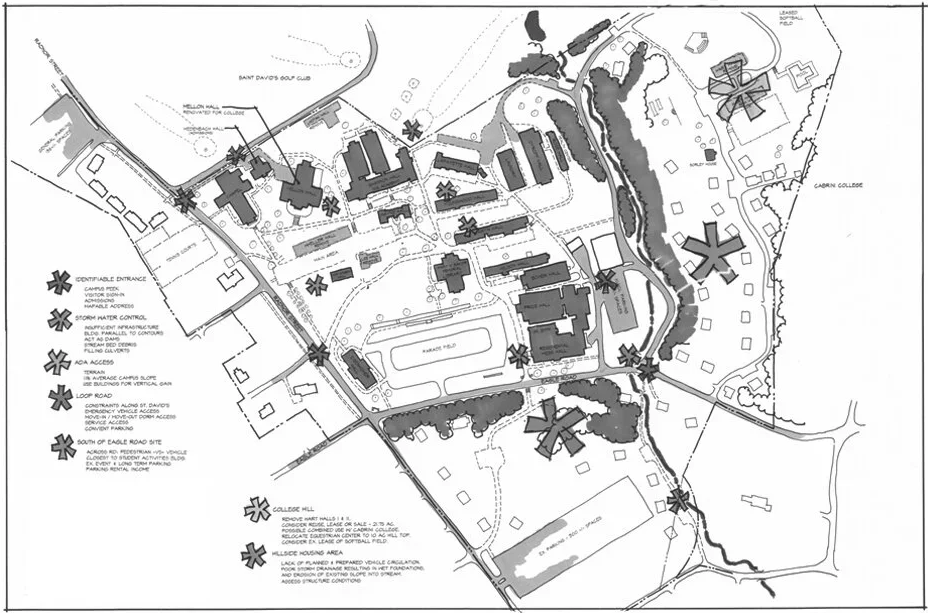
Space utilization studies, facility condition assessments, and feasibility analyses provide leadership with the data needed to evaluate options objectively. These efforts help answer critical questions such as:
- Which buildings are strong candidates for reinvestment
- Which facilities no longer support current or future programs
- What the cost, disruption, and operational impacts of different scenarios may be
When undertaken early, this work allows institutions to test multiple strategies, align decisions with funding cycles and phasing, and move forward with confidence before committing to permanent changes.
A Case Study in Campus Right-Sizing
Buchart Horn led a similar planning effort at the California University of Pennsylvania, now PennWest California, as part of a comprehensive Campus Master Planning process. Through a study addressing declining enrollment throughout the state, the Pennsylvania State System of Higher Education (PASSHE) recommended the University significantly reduce its overall assignable square footage.
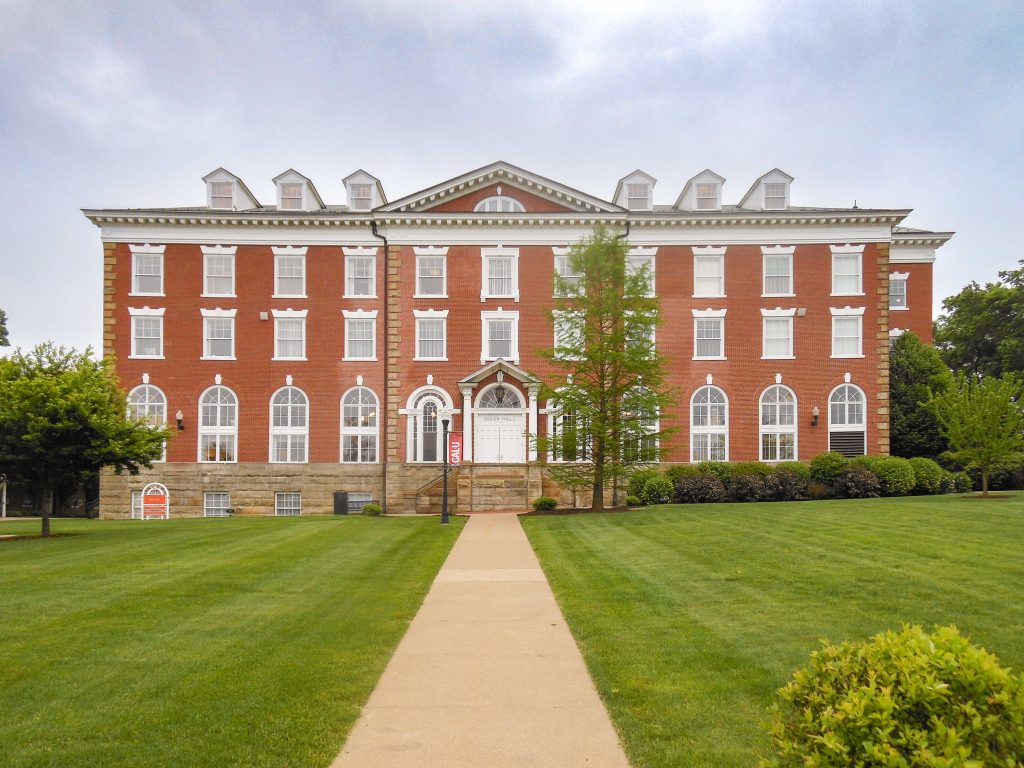
Rather than treating this target as a purely numerical exercise, the planning effort focused on understanding how the University’s academic programs, building types, facility conditions, and infrastructure systems functioned collectively across the campus. Through a detailed space planning analysis, the team evaluated which facilities best supported current and projected academic needs, which buildings presented disproportionate operating or capital costs, and how different reduction scenarios would affect long-term flexibility.
From Enrollment Targets to a Flexible, Data-Driven Strategy
This process ultimately led to a right-sizing strategy that fell below the system-level reduction target but was more operationally feasible, financially justifiable, and responsive to campus realities. Importantly, the recommended approach preserved capacity for future growth should enrollment rebound, avoiding decisions that would unnecessarily limit long-term institutional options.
Phasing was a critical component of the plan. Recommendations were organized into near-, mid-, and long-term horizons, allowing the University to align capital investment and downsizing decisions with realistic funding cycles and academic priorities over 5-, 10-, and 20-year timeframes. This phased approach reduced disruption while providing a clear roadmap for incremental implementation.
In parallel with building consolidation and selective demolition, the planning process addressed campus-wide infrastructure. A key consideration was reducing reliance on an aging central utility plant by reorganizing the campus into smaller groupings of buildings with shared systems, as well as identifying opportunities for individual building systems where appropriate. The plan also explored energy-efficient strategies, including the potential for a geothermal field, as part of a broader effort to improve resilience, reduce long-term operating costs, and modernize campus utilities in step with right-sizing efforts.
Preserving the character of the campus and many of its historic buildings remained a guiding principle throughout the process. Through extensive stakeholder workshops, building walkthroughs, and data-driven analysis, the team developed a phased framework that allowed the University to right-size its footprint while maintaining flexibility for future program and enrollment changes.
The resulting Master Plan was intentionally structured as a living document, providing a clear yet adaptable framework to guide ongoing decision-making as institutional priorities continue to evolve.
Right-Sizing as a Strategic Opportunity
Right-sizing is often perceived as a reaction to constraint, but when guided by the right framework, it becomes an exercise in disciplined asset management. When approached strategically, it allows institutions to reduce deferred maintenance exposure, improve space efficiency, and focus capital resources where they deliver the greatest value.
Architects and planners, in close partnership with an institution’s facilities team, play a critical role in this process by translating complex data into practical, phased solutions that balance academic goals, financial realities, and long-term adaptability. The most effective plans are not prescriptive end states, but adaptable frameworks that allow campuses to respond as enrollment, programs, and infrastructure needs evolve.
As demographics continue to shift, campuses that take a proactive, data-informed approach to space planning will be better positioned to remain competitive, resilient, and financially sound. Rethinking campus space is not about doing less. It is about ensuring that every square foot is intentional, sustainable, and aligned with the institution’s future. To borrow a familiar phrase, effective right-sizing recognizes that less is more.
A Trusted Partner
Buchart Horn works alongside higher education leaders to assess existing facilities, explore right-sizing and optimization strategies, and develop phased, adaptable campus plans that align academic priorities with long-term financial stewardship. If your institution is navigating these challenges, we invite you to reach out to learn how our planning and design teams can help you adjust to today’s realities while preparing for what comes next.